| Supported by the | Bavarian State Ministry of Science and the Arts (StMWK) |
|---|---|
| Start date | 01.09.2023 |
| Term until | 31.08.2028 |
The aim of the project is to make a significant contribution to the implementation of inclusive content and topics, particularly in educational science studies. The aim is to reach all student teachers in Bavaria with relevant basic knowledge on the subject of inclusion. In addition, inter- and intra-university structures are to be formed and expanded, especially across all three phases of teacher training. For the first, university phase of teacher training, the main aim is to have a networking effect on subject didactics. The seconded teacher should also support teaching at the Chair of School Pedagogy with two seminar formats per semester in the form of their own teaching. One seminar format will focus on specific learning conditions such as autism, dyslexia, ADHD, attachment disorders, mental illness, disabilities, etc. A further seminar format makes inclusive pedagogical thinking itself the focus of the courses. In addition, the Chair of Philosophy will offer one EWS seminar per semester that reflects on the topics of inclusion and disability in general in order to address the entire range of students in as many compulsory courses as possible. As part of the course's own teaching, school visits to the profile schools in Lower Bavaria should always be included in the seminars. This is done in order to make the theory that has been developed clear to students in practice and to enter into dialog with teachers at the schools in the sense of networking.
WiSe 24/25:
40622 Seminar “Ringveranstaltung BAS!S: Heterogeneity and inclusion in the school context”: The Bavarian Education and Teaching Act describes inclusive teaching as a task for all schools (Art. 2 Para. 2). The aim of this event is to help prepare student teachers from all types of schools for this task. In addition to the five events held in Passau in person, ten sessions will be held via Zoom. These will be organized by grassroots staff from all Bavarian universities. The event focuses on the following topics: Teachers' attitudes towards the heterogeneity of pupils, teachers' actions in inclusive teaching settings, cooperation between teachers and other stakeholders in the education and health sectors, and school development for high-quality inclusive education. Through the participation of seconded teachers from all types of schools, the focus of this course is on a close integration of theory and school practice. The usual ECTS points and participation certificates can be acquired in this course.
40623 Seminar “Inclusive education in the context of vulnerable learning starting points and skills for school planning practice”: The aim of the seminar is to acquire specialist knowledge in relation to specific learning starting points in the context of inclusive education. This knowledge is essential for prospective teachers to be able to design heterogeneity-sensitive lessons. Poverty, disability, migration and multilingualism will be among the vulnerable learning backgrounds discussed in the seminar. This knowledge should form a sound basis for reflecting on school planning practice, which will then be put into practice using the example of co-teaching.
40040 Seminar “Human rights and inclusion”: The discussion about human rights, which has been going on since the Enlightenment at the latest, guarantees every person inalienable rights as a human being. However, claims and reality often drift apart. It was against this background that the UN Convention on the Rights of Persons with Disabilities, ratified in Germany in 2008, was drafted. In particular, it aims to point out that people with disabilities should be included in general human rights. So is “inclusion” really a human right in its own right? This question will accompany us in the seminar alongside an in-depth examination of a general philosophy of human rights.
SoSe 24:
40622 Seminar “Specific learning starting points in inclusive teaching settings”: The topics will be ADHD, autism, disability, psychological stress and migration - experts will also be invited.
40623 Seminar “Ethical foundations of inclusive education and skills for school planning practice”: In addition to the theoretical discussion, we will also look at inclusive school settings and try out “team teaching” ourselves in cooperation with the teachers' seminar.
40080 Seminar “Justice in the context of disability”: In the field of philosophy
WiSe 23/24:
40622 Seminar “Autism”: the term “autism” is on everyone's lips and is now used almost inflationarily. But what exactly is the phenomenon of “autism”? The seminar aims to look at different descriptions of this phenomenon. Among other things, the first descriptions of the phenomenon according to Kanner and Asperger, the “Theory of Mind” approach and the embodiment approach will be discussed. However, the focus will always be on the specific opportunities for autistic people to participate and the question of how prospective teachers can do justice to this, particularly in everyday school and classroom life.
40623 Seminar “Introduction to inclusive pedagogical thinking”: Pedagogical work always includes an element of curative education, insofar as conventional pedagogical processes always run the risk of failing. In this respect, curative education thinking has always been “inclusive” - long before the explicit term for it emerged. With this in mind, it is worth looking at the paradigm of curative education as an introduction to inclusive pedagogical thinking. The topics covered will include “neglect”, “compensation”, ‘language’ and “self-responsible living”. The seminar thus also sees itself as an introduction to general pedagogy, i.e. as a theory of education in the context of disability.
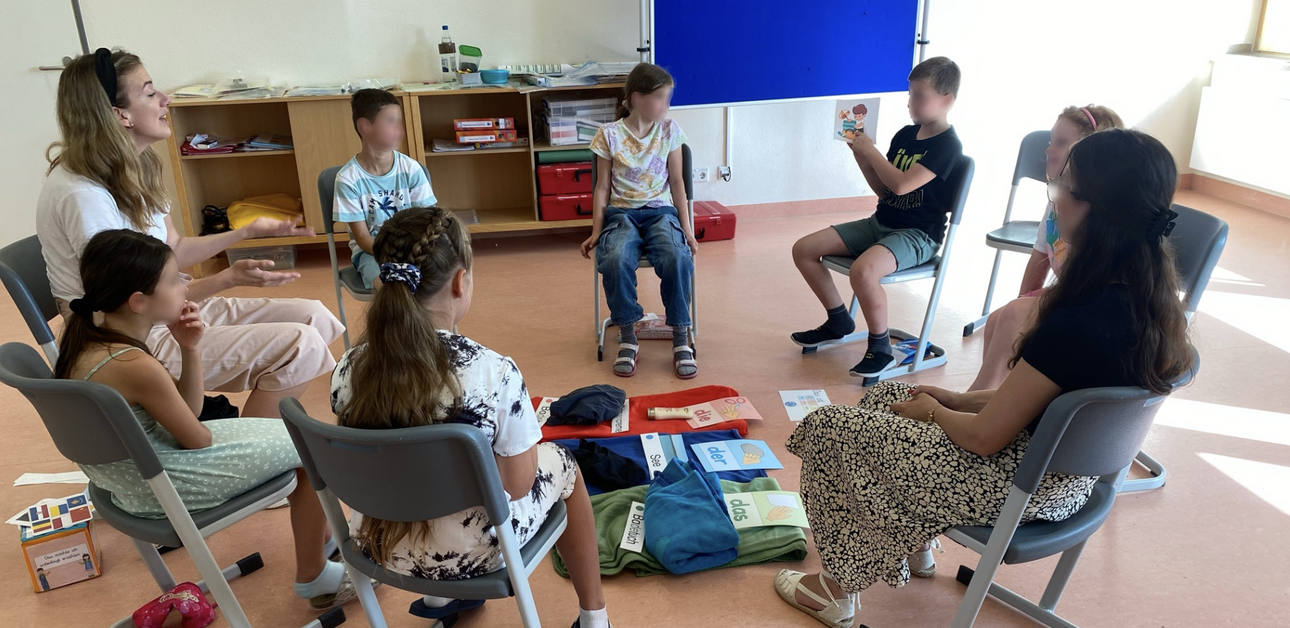
10.07.24, team teaching action with the GS VII/1 Landshut teaching staff seminar and students from the University of Passa
19.11.2024, DAZ-day as part of the GS VII/1 Landshut teaching staff seminar
Various cooperative events with German didactics, school pedagogy, primary school pedagogy and the Chair of DaZ/DaF.
The lecture series on “Perspectives on Diversity and Inclusion in Educational Contexts” will take place every Tuesday from 4-6 p.m. in summer semester 25.
Teachers will be able to register for the individual lectures via Fibs. Further information will follow.
The lecture will cover the following range of topics: Dealing with different dimensions of heterogeneity (such as disability, migration, gender, psychological stress and giftedness) in school educational contexts as well as pedagogical-didactic ways of dealing with these inclusive tasks.
Further information will follow.
The Center for Teacher Education and Subject Didactics (ZLF) at the University of Passau is committed to sustainably anchoring the topic of inclusion in teacher training. To this end, the university has acquired a new third-party funded project from the Bavarian Ministry of Education and Cultural Affairs: BAS!S 2.0.
The BAS!S 2.0 initiative aims to provide all student teachers in Bavaria with basic knowledge on the topic of inclusion. It also aims to promote inter- and intra-university cooperation across all three phases of teacher training (degree course, teacher traineeship, further training). The aim of the project is to strengthen the topics of inclusion, heterogeneity and diversity in teacher training at all Bavarian universities in the first university phase. Prospective teachers of all school types are to be made aware of these key issues.
This multi-layered approach includes networking with subject didactics, supporting teaching at the Chair of School Pedagogy (Chair of Educational Science with a focus on school development and professionalization research) and offering seminars on various inclusion topics. The project emphasizes the importance of inclusive pedagogical thinking and attempts to build a bridge between theory and practice through school visits to the inclusion profile schools in Lower Bavaria. This is to be achieved primarily by linking the first and second phases of training.
The BAS!S 2.0 project also aims to sensitize lecturers to the topic of inclusion in order to integrate it into teaching in the long term. This is achieved with team teaching (several lecturers conduct seminars together) and “teaching modules”, such as case studies or teacher interviews, which are developed as part of the project and can then be used as open educational resources by all lecturers for future teaching.
Formats for further training in higher education didactics and for exchange on inclusion topics support lecturers in teacher training. In addition, a lecture series with experts on the topic of “Perspectives on diversity and inclusion in educational contexts” is planned at the University of Passau for the summer semester 2025.
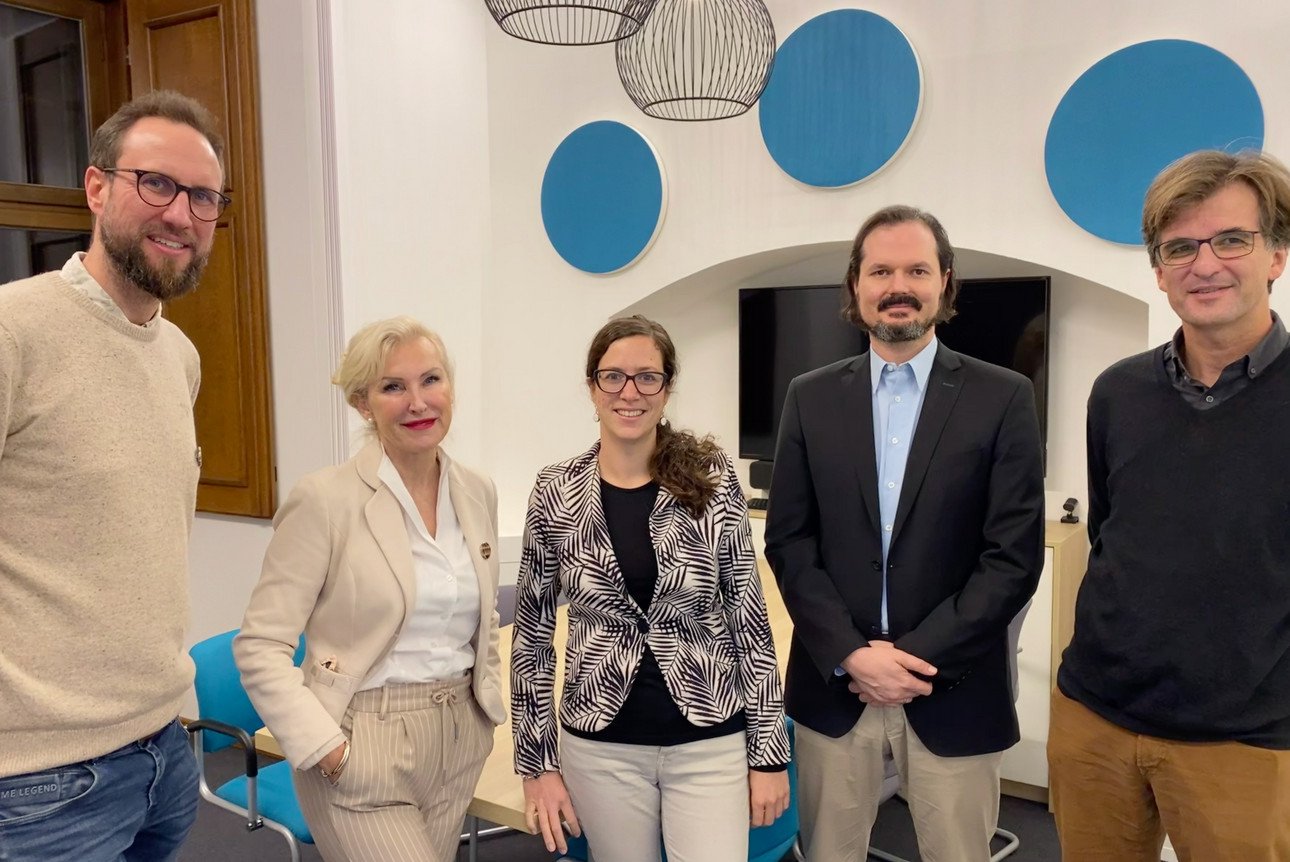
Five chairs are involved in BAS!S 2.0 and an experienced team is coordinating the project. Project leader Prof. Dr. Julia Ricart Brede and her deputy Dr. Stefanie Winkler emphasize the broad significance of inclusion: "The topic of disability/non-disability is not the only area of inclusion. It is also about individual and social heterogeneity, e.g. in terms of migration and linguistic diversity."
Project coordinator Dr. Florian Salzberger supports teaching at the Chair of School Pedagogy as a seconded teacher. "Students can register for courses in school education and philosophy. There's a seminar on specific learning situations, such as autism, another on the ethical foundations of inclusive education and a seminar on the topic of justice, which reflects on inclusion and disability conceptually within a general framework," he explains. “This allows us to address the entire spectrum of student teachers.”
The BAS!S advisory board also includes Prof. Dr. Matthias Brandl (Mathematics Didactics), Prof. Dr. Axinja Hachfeld and Prof. Dr. Christina Hansen (both Educational Science) and Prof. Dr. Markus Pissarek (German Didactics).
In order to anchor the topic of inclusion more firmly both within and outside of the University of Passau, BAS!S 2.0 uses and develops appropriate cooperation structures. This includes, for example, inviting school experts to university courses, advising and training teaching staff on inclusion-specific issues and networking with the University's Diversity and Equality Office.
The school internships that all student teachers are required to complete in order to gain practical experience in schools are also important for the project. As part of BAS!S 2.0, further training units for trainee teachers on the topic of inclusion and an exchange platform for practical implementation in schools are planned.
In the second phase of teacher training, the traineeship, the BAS!S committee works closely with a seminar for teacher training and ensures that content on inclusion is also established in this phase.
The BAS!S 2.0 project runs until August 31, 2028. Lecturers, schools and teachers can find out about possible collaborations, events and workshops on the ZLF website.
Prof. Dr. Ricart Brede (Head)
Faculty Council of the Faculty of Arts and Humanities
Phone: +49 851 509 3900
Dr. Winkler (Deputy Head)
Professorship for Didactics of Mathematics
Phone: +49 851 509 3179
Dr. Florian Salzberger
Deputy Teacher at the ZLF, Research Assistant
Phone: +49 851 509 2964
If you are a student who is pregnant or currently breastfeeding, please contact the Family Service of the Equal Opportunities Office (if you have not already done so) so that the University can meet its obligations under the Maternity Protection Act.
Are you planning to complete a school internship soon?
Then please contact your internship office in good time. If you are assigned to a school, the internship offices must inform the school management about the pregnancy in order to assess the risk.